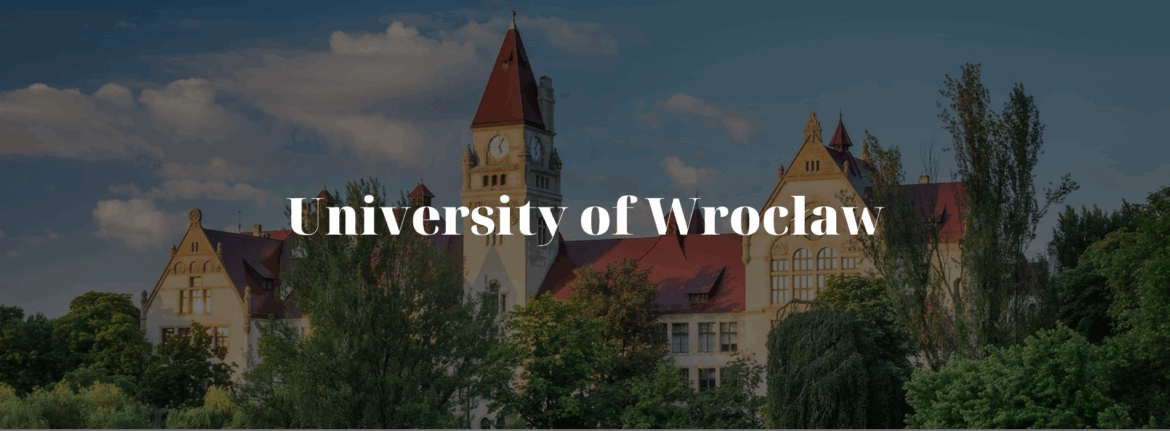
In the city of Wrocław, where the architectural elegance of centuries blends seamlessly with modern European life, stands a university that embodies both tradition and transformation: the University of Wrocław. Its story is one of persistence, political complexity, and academic achievement—stretching from medieval ambitions, through Habsburg and Prussian power struggles, to becoming one of Poland’s major centres of scientific and humanistic inquiry.
First Ambitions: A Medieval Dream Delayed
The idea of a university in Wrocław traces back to the early 16th century. In 1505, King Vladislaus II of Hungary and Bohemia issued a foundation act for a university in the city, but due to political and financial obstacles, the plans never materialised. For over 150 years, the vision remained unfulfilled—overshadowed by regional instability and shifting imperial interests.
It wasn’t until the dawn of the 18th century that the university finally emerged. Founded by Emperor Leopold I of Habsburg in 1702, the new institution was initially known as Leopoldina. It served as a Jesuit-run educational centre designed to reinforce Catholic influence in Silesia, a region caught in the crosscurrents of Protestant and Catholic power.
Leopoldina and the Jesuit Era
The newly founded Universitas Leopoldina was granted imperial status and established as a Catholic counterpart to the Protestant University of Frankfurt (Viadrina) in Brandenburg. The first faculties to open were philosophy and theology—reflecting the Jesuit character of the institution.
Throughout the 18th century, the university’s academic reach remained modest. It was heavily influenced by religious priorities, and while it gained some prestige within the Habsburg domains, it was still a relatively small academic centre. Its development was soon disrupted again by a dramatic political shift.
Prussian Reforms and the Birth of the Modern University
In 1741, after the First Silesian War, Wrocław (then Breslau) came under Prussian control. This changed the fate of the Leopoldina profoundly. In 1811, the Prussian government merged it with the University of Frankfurt (Viadrina), which had been dissolved. The newly formed institution was renamed Schlesische Friedrich-Wilhelms-Universität zu Breslau (Silesian Frederick William University in Breslau).
This merger marked the beginning of the modern university. It now had five faculties: philosophy, law, medicine, theology (both Catholic and Protestant), and later natural sciences. The institution was co-educational in terms of faith—it housed both Catholic and Protestant theological faculties—and it quickly became one of the largest and most prestigious universities in the German-speaking world.
By the late 19th and early 20th centuries, the University of Breslau had established itself as a thriving research centre. It counted numerous scholars of global influence among its faculty and alumni, particularly in the fields of medicine, law, philology, mathematics, and natural sciences.
Academic Excellence and Nobel Laureates
During the 19th and early 20th centuries, the University of Breslau gained international recognition. It became known for producing cutting-edge scholarship and fostering intellectual exchange. Between 1902 and 1944, the university had nine Nobel Prize winners among its faculty and students—across disciplines such as chemistry, medicine, and physics. Names like Fritz Haber, Philipp Lenard, and Paul Ehrlich contributed to its reputation as a scientific powerhouse.
The university was also home to notable philosophers, jurists, and linguists. At its height, it stood shoulder to shoulder with other elite institutions of the German Empire. However, its history would once again be reshaped by war and geopolitics.
World War II and the Destruction of Breslau
The Second World War marked the end of the university in its German form. During the siege of Breslau in 1945, a significant portion of the city—including university buildings—was destroyed. After the war, Wrocław became part of Poland as a result of shifting borders established at the Potsdam Conference. The German academic community either fled or was expelled, and the institution, as it had existed under the Prussian system, ceased to operate.
Yet the university was not lost—it was reborn.
A Polish Renaissance: Rebirth in 1945
In the immediate aftermath of the war, Polish academics, many of them displaced from the eastern territories lost to the Soviet Union (especially Lwów/Lviv), arrived in Wrocław to revive the university. Professors and researchers from institutions like Jan Kazimierz University in Lwów brought with them their experience, traditions, and intellectual legacy.
On August 24, 1945, the University of Wrocław officially resumed its activity under Polish administration, sharing its buildings and early organisation with the newly founded Wrocław University of Science and Technology. The dual rebirth was symbolic—both institutions carried the hopes of rebuilding Polish academic life in a new western landscape.
The postwar period was one of reconstruction—of buildings, departments, libraries, and identity. The university adopted the name Uniwersytet Wrocławski im. Bolesława Bieruta (after the communist leader), though this patronage was later removed following the fall of communism.
Growth, Independence, and Modern Identity
Over the second half of the 20th century, the University of Wrocław expanded rapidly. New faculties were opened, student enrolment grew, and research fields diversified. While political pressures existed during the communist era, the university remained an important hub for scientific and intellectual discourse in Poland.
After 1989, the university entered a new phase. Freed from political interference, it developed international partnerships, joined academic networks, and gained access to EU funding and research programmes. It underwent significant modernisation—both in infrastructure and academic standards.
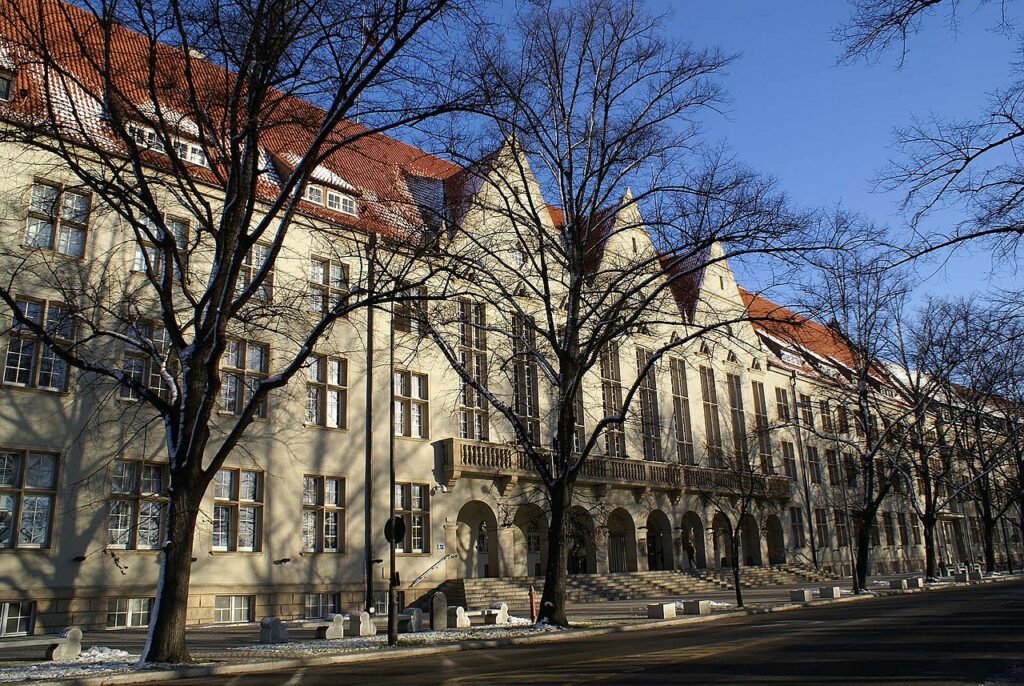
Today, the university has 10 faculties and over 25,000 students. Its departments cover a wide range of disciplines, from humanities and law to life sciences and computational studies. The historic main building, located on the Odra riverbank, remains a striking symbol of continuity—its Baroque architecture and the Aula Leopoldina (Leopoldine Hall) are among the most iconic interiors in Polish academia.
Heritage and Recognition
The University of Wrocław embraces its complex heritage. While it is a Polish university, it acknowledges the German, Habsburg, and even Jesuit layers of its past. This attitude is not just symbolic but is reflected in research, museum curation, and international cooperation. The university museum, located in the main building, presents the centuries-old academic legacy of Wrocław.
In 2002, the university celebrated the 300th anniversary of its founding, marking a full cycle of transformation—from Leopoldina, through the Prussian era, to a modern Polish institution. Commemorative events, publications, and historical research continue to deepen understanding of its unique academic lineage.
Conclusion: A Living Institution of Change
The University of Wrocław is not simply a continuation of a medieval dream—it is the embodiment of how academic institutions survive upheaval, war, and political transformation. From the unrealised visions of 1505 to the multicultural grandeur of the 19th century, and from the devastation of 1945 to its dynamic post-1989 development, the university stands as a monument to resilience and reinvention.
In embracing both tradition and innovation, the University of Wrocław has earned its place among Poland’s leading universities—honouring its past while contributing to the future of European research and education.
You may find the following topics interesting: