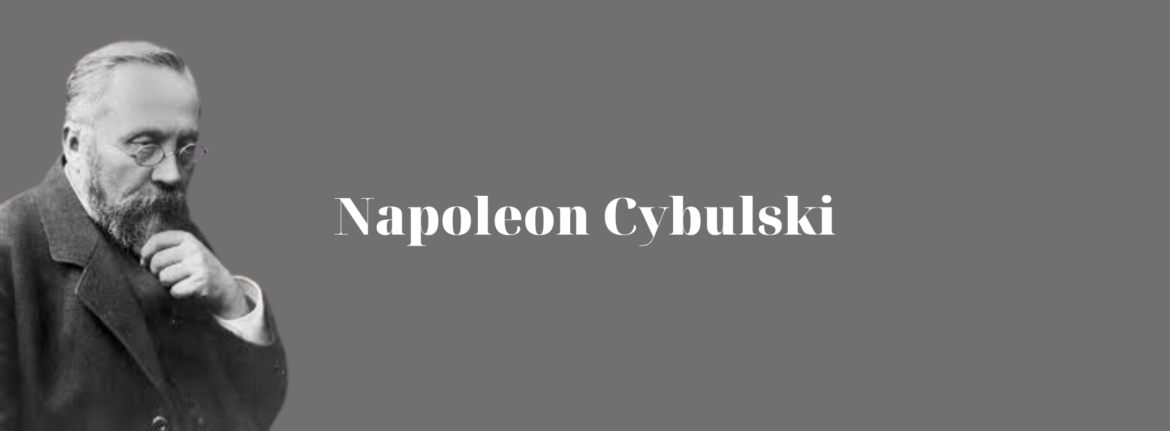
At the turn of the 20th century, the human body was still largely viewed through the lens of pure neurology—scientists believed that almost all regulatory functions were controlled exclusively by the nervous system. It took the brilliant, multifaceted mind of Polish physiologist Napoleon Nikodem Cybulski to prove that chemical messengers running through our blood held just as much power over our survival.
As the founder of the Kraków School of Physiology at the Jagiellonian University, Cybulski was a relentless innovator. His laboratory became the birthplace of groundbreaking discoveries in endocrinology, neurophysiology, and hemodynamics, forever changing how we understand the „fight or flight” response.
The „Nadnerczyna” Breakthrough
In the early 1890s, the precise function of the adrenal glands—small organs perched atop the kidneys—was a total biological mystery. Cybulski, alongside his young assistant Władysław Szymonowicz, embarked on a rigorous series of animal experiments to uncover their purpose.
In 1894 and 1895, they surgically removed the adrenal glands from test animals, noting that the subjects quickly became apathetic, suffered severe drops in blood pressure, and eventually slipped toward death. The true breakthrough came when Cybulski injected these dying animals with an intravenous water-based extract synthesized from the core of the adrenal gland.
The results were explosive and instantaneous. The animals essentially „resurrected” for a brief period—their hearts pounded, their blood vessels constricted, and their blood pressure skyrocketed. Cybulski and Szymonowicz realized that the adrenal gland was secreting a powerful, biologically active survival substance directly into the bloodstream. Cybulski named this mysterious factor nadnerczyna (derived from the Polish word for adrenal gland, nadnercze).
Unbeknownst to them, British researchers George Oliver and Edward Schäfer were making the exact same discovery simultaneously in London. Cybulski’s nadnerczyna was later globally recognized by the name coined by Japanese chemist Jōkichi Takamine: adrenaline (epinephrine).
Measuring the River of Life
Before he revolutionized endocrinology, Cybulski had already made a massive name for himself in the study of blood flow. Traditional methods of measuring how fast blood moved through veins and arteries were notoriously inaccurate and relied heavily on rough calculations rather than direct observation.
To solve this, Cybulski engineered the photohemotachometer. This ingenious device combined a specialized manometer (to detect lateral changes in fluid pressure) with a moving strip of light-sensitive photographic paper. For the first time in medical history, a scientist could continuously and accurately record the high-speed, dynamic velocity of blood flow in relation to the exact phases of a heartbeat. His methodology gave doctors a new, profoundly accurate way to study the pathophysiology of the human circulatory system.
Exploring the Electric Brain and the Unconscious
Cybulski’s scientific curiosity could not be confined to just blood and hormones; he was equally fascinated by the electrical and psychological mysteries of the human brain.
In 1890, working with his student Adolf Beck, Cybulski conducted some of the very first electroencephalography (EEG) recordings in history. They successfully registered the continuous electrical oscillations of the cerebral cortex—what we now call brain waves—long before the technology became a standard diagnostic tool in modern neurology.
He was also a true pioneer in psychology. Intrigued by the phenomenon of hypnosis, he published a groundbreaking scientific paper analyzing the trance state from a strictly physiological standpoint. Decades ahead of his time, his research proposed theories regarding human behavior and hidden mental states that actually anticipated Sigmund Freud’s famous concept of the unconscious mind.
Though he was nominated for the Nobel Prize in Physiology or Medicine three times between 1911 and 1918, he never officially received the award. Yet, his legacy requires no medal. Every time an EpiPen saves a life, or an EEG maps a seizing brain, modern medicine leans heavily on the foundational methodology engineered by Napoleon Cybulski.