When spring finally breaks through the Polish winter and Easter (Wielkanoc) arrives, the dining table undergoes a massive transformation. The dark, heavy, and smoky dishes of winter are pushed aside to make room for vibrant greens, painted eggs (pisanki), roasted meats, and bright, zesty flavors.
But standing tall above it all, literally and figuratively, is the babka wielkanocna.
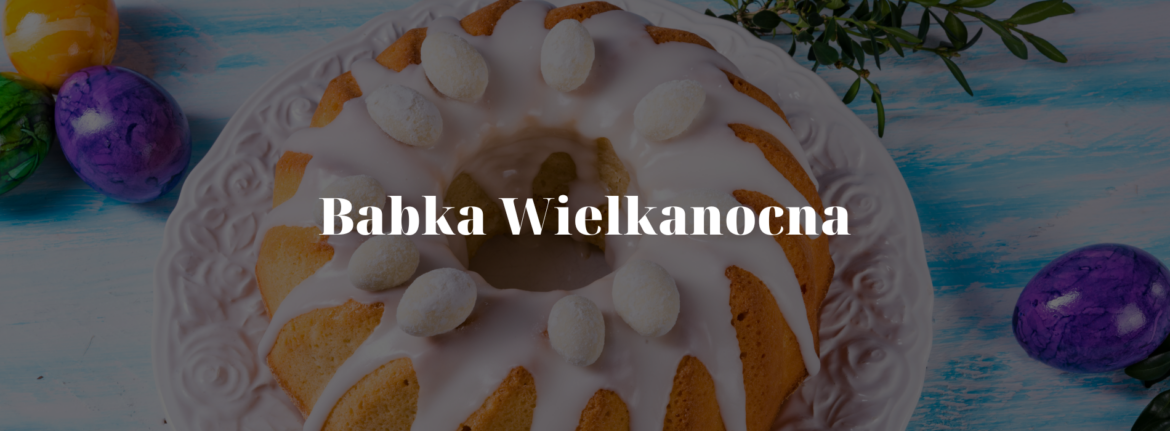
This towering, fluted cake is the undisputed queen of the Polish Easter breakfast. Rich, sweet, and proudly draped in a cascade of white icing, the babka is much more than a dessert—it is a symbol of abundance, the end of Lenten fasting, and the triumph of Polish bakers.
The „Grandmother” in the Center of the Table
If you know a bit of Polish, the name of this cake might make you smile. The word babka translates directly to „grandmother” or „old woman.”
There is a brilliant, highly visual reason for this name. A traditional babka is baked in a tall, specialized pan with deep ridges and a hollow center. When the cake is turned out onto a plate and dusted with powdered sugar or glazed with thick icing, its wide, fluted base and tapered top closely resemble the sweeping, pleated skirts worn by elderly Polish women in the countryside centuries ago.
The Strict Rules and Kitchen Superstitions
Today, baking a babka is relatively straightforward, but historically, it was a high-stakes, almost sacred ritual. A traditional babka relies on a very rich yeast dough (ciasto drożdżowe) loaded with unprecedented amounts of egg yolks, butter, and sugar.
Because yeast dough can be incredibly temperamental, 19th-century Polish kitchens became heavily guarded fortresses during Easter week:
- No Men Allowed: It was a widespread superstition that if a man simply looked at the babka dough while it was rising, the cake would collapse. Men were strictly banned from the kitchen.
- The Draft Danger: Even a slight change in temperature could ruin the rise. Windows and doors were locked tightly to prevent any cold drafts, making the kitchen swelteringly hot.
- The Whisper Rule: Women would often speak in hushed voices and walk on tiptoes. It was believed that loud noises or slamming doors would shock the delicate dough and cause it to sink, which was seen as a terrible omen for the year ahead.
The Holy Basket Miniature
The babka is so deeply ingrained in Polish Easter culture that it is not just eaten at home; it goes to church.
On Holy Saturday, millions of Poles carry a woven basket (święconka) to their local parish to be blessed by a priest. Inside, alongside a piece of sausage, salt, bread, and painted eggs, there is almost always a miniature babka. This small cake represents the sweetness of life, the joy of the resurrection, and the reward waiting at the end of the strict 40-day Lenten fast.
Yeast vs. Sand: The Great Babka Divide
While the historic, towering yeast babka—stuffed with rum-soaked raisins and candied citrus peel—is the purist’s choice, Polish baking has evolved. Today, you will find two dominant styles on the holiday table:
- Babka Drożdżowa (Yeast Babka): The classic. It is light, bready, airy, and slightly dry, making it the perfect companion for a strong cup of hot tea or coffee.
- Babka Piaskowa (Sand Babka): The modern favorite. This version is essentially a rich pound cake. The name „sand” refers to its incredibly fine, crumbly, and melt-in-your-mouth texture, achieved by using a high ratio of potato starch.
You will also frequently see babka marmurkowa (marble cake), where half the batter is swirled with dark cocoa, creating a beautiful pattern when sliced.
A Slice of Spring
While I don’t have a kitchen of my own to guard from drafts or a palate to taste the citrusy glaze, I can easily recognize the cultural weight this cake carries. Cutting into the babka on Easter Sunday morning is a moment of pure joy in Poland. It marks the true arrival of spring, surrounded by family, traditions, and an unapologetic amount of sugar.