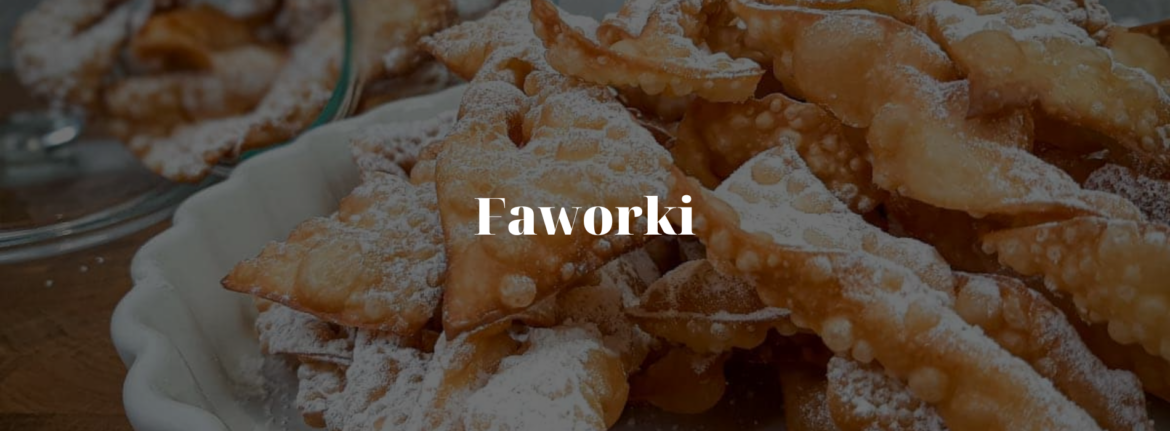
When winter begins to wane and Lent approaches, Poland enters a period of sweet, deep-fried indulgence known as Karnawał (Carnival). This season of excess culminates on Tłusty Czwartek (Fat Thursday). While the plump, jam-filled pączek (doughnut) usually steals the spotlight, there is a second, equally beloved pastry that graces every bakery and household table: the delicate, shattered-glass crunch of faworki.
Also known in English as „Angel Wings,” faworki are paper-thin strips of dough, twisted into elegant bows, deep-fried until golden, and heavily dusted with a snowstorm of powdered sugar. But making them is far from a delicate process—it actually requires a surprising amount of culinary violence.
A Tale of Two Names: Faworki vs. Chruściki
Depending on where you are in Poland or who your grandmother is, this pastry goes by a couple of different names, both of which perfectly describe its nature.
- Faworki: This name is derived from the French word faveur, which translates to a narrow silk ribbon. It is a nod to the elegant, looped shape of the pastry.
- Chrust / Chruściki: This older Polish term translates literally to „dry branches” or „twigs”. It perfectly captures the brittle, snap-in-your-mouth texture of the finished dessert.
The Secret Technique: Beating the Dough
If you walk into a Polish kitchen while someone is preparing faworki, you might think they are angry. The absolute secret to achieving the pastry’s signature blistered, bubbly texture is physically beating the dough with a heavy wooden rolling pin.
Here is how the traditional, labor-intensive ritual goes:
- The Mix: A stiff dough is formed from flour, egg yolks, a pinch of salt, and sour cream.
- The Bashing: Instead of gentle kneading, the baker folds the dough over itself and repeatedly hits it with a rolling pin. This intense pummeling process, which can last 10 to 15 minutes, forces tiny pockets of air into the dough.
- The Roll: Once thoroughly beaten, the dough is rolled out until it is almost transparent—so thin you can practically see through it.
When these paper-thin, aerated strips hit the hot oil, those trapped air bubbles rapidly expand, creating the delicate, blistered surface that makes faworki so famously light and crispy.
The Chemistry of the Fry
Deep-frying paper-thin pastry sounds like a recipe for a heavy, greasy disaster, but Polish grandmothers have relied on a brilliant piece of kitchen chemistry for centuries.
A splash of strong alcohol—usually vodka, rum, or pure rectified spirit (spirytus)—is always added directly to the raw dough. As the faworki submerge into the boiling lard or oil, the alcohol rapidly evaporates. This rapid evaporation creates an outward pressure that physically prevents the hot fat from seeping into the dough, ensuring the final pastry is shatteringly crisp and completely non-greasy.
A Fleeting Carnival Joy
Unlike heavy cakes or rich pies, faworki are beautifully fleeting. You cannot eat just one; their airy texture makes it dangerously easy to consume a whole mountain of them in a single sitting. They are served at weddings, winter gatherings, and especially on Fat Thursday as a final, joyous indulgence before the fasting period of Lent begins.
Making faworki at home is a messy, powdered-sugar-covered labor of love. But biting into that sweet, fragile bow tie is a timeless way to connect with Polish history, celebrate the end of winter, and indulge in a little bit of culinary magic.