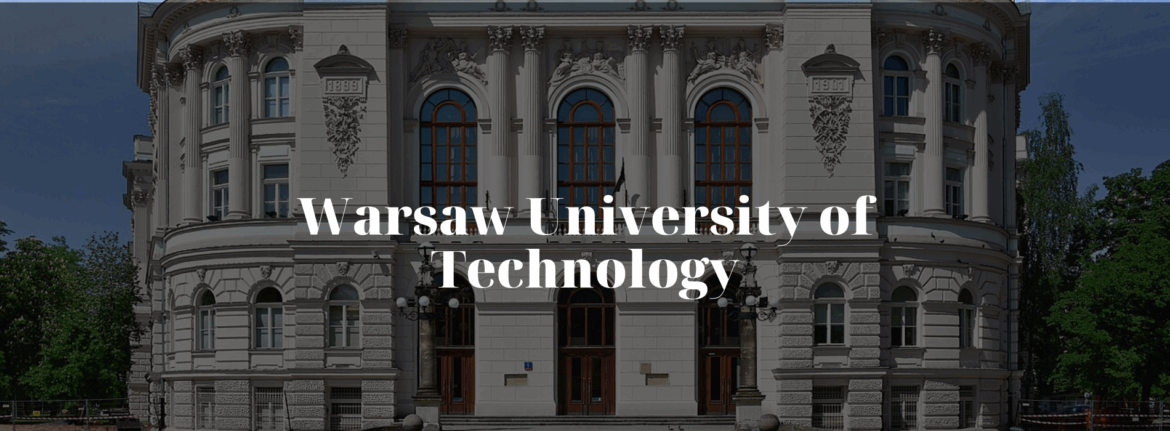
Among Poland’s most prestigious and impactful academic institutions stands the Warsaw University of Technology (Politechnika Warszawska, WUT)—a beacon of engineering excellence, innovation, and resilience. With a history shaped by Poland’s turbulent path to independence, occupation, and modernisation, the university has consistently served as a hub for scientific progress, shaping the nation’s industrial, technological, and intellectual future.
From Imperial Roots to National Symbol
The Warsaw University of Technology was officially established in 1915, but its origins date back to the mid-19th century. At the time, Poland was partitioned and Warsaw was under Russian rule. In 1826, the first technical school in Warsaw—Preparatory School for the Polytechnic Institute—was created, only to be shut down during political unrest. After decades of limited technical education, Polish engineers and intellectuals advocated for a modern institution to serve the needs of an industrialising society.
In 1898, under Tsarist authority, the Imperial Warsaw Polytechnic Institute was founded. Although it offered a high level of education, instruction was in Russian and heavily controlled by the occupying authorities. It wasn’t until Poland regained independence in 1918 that the institution was fully “Polonised”—given autonomy, Polish leadership, and a central role in nation-building. Renamed the Warsaw University of Technology, it quickly became a cornerstone of Poland’s intellectual and industrial revival.
Academic Excellence and Breadth
Today, the Warsaw University of Technology is one of the largest and most respected technical universities in Central and Eastern Europe. It hosts over 30,000 students across 19 faculties, covering a wide spectrum of disciplines—from civil, electrical, and mechanical engineering to architecture, business, mathematics, and applied sciences.
WUT offers undergraduate, graduate, and doctoral programmes, many of which are available in English. The university has earned a reputation for its high standards, rigorous curriculum, and research-led teaching. It consistently ranks at the top of Polish university rankings and appears in international listings such as QS World University Rankings and Times Higher Education, particularly in technical and engineering categories.
A defining feature of WUT is its integration of theoretical foundations with practical experience. The curriculum is designed to equip students with both academic knowledge and hands-on skills—through labs, design projects, internships, and close collaboration with industry.
A Campus Steeped in History
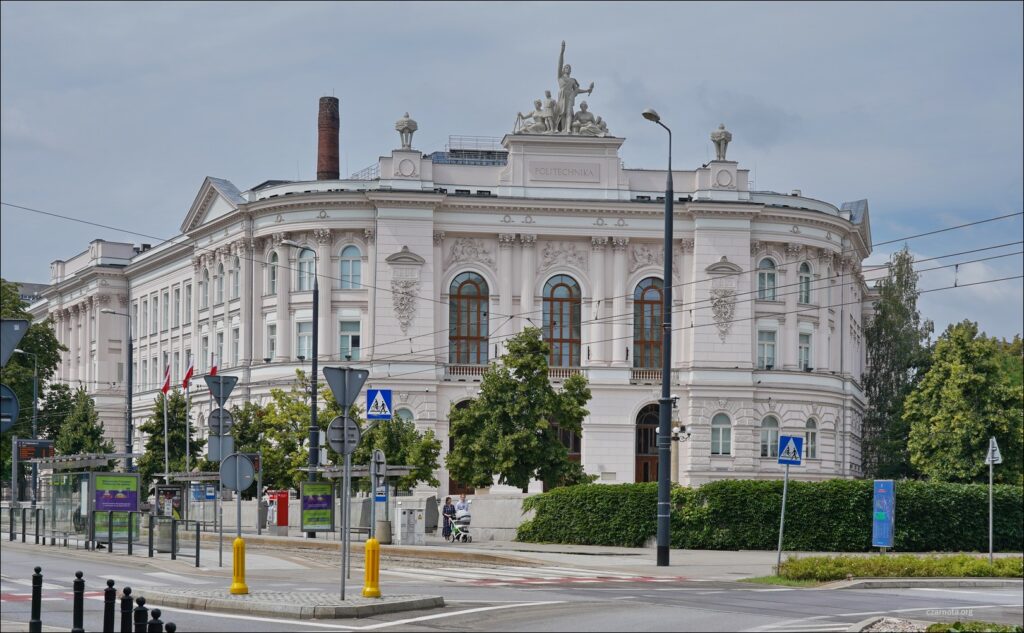
Located in central Warsaw, the university’s main campus is a blend of historic architecture and modern academic facilities. The iconic Main Building, completed in 1901, is a symbol of the school’s academic heritage and Polish identity. Its neoclassical style and ornate interiors have witnessed both triumph and tragedy—from student protests during wartime to grand graduation ceremonies in peacetime.
Despite the destruction wrought by World War II—during which many professors and students took part in resistance efforts and underground education—the campus was rebuilt and revitalised in the post-war years. Today, it remains a cultural and architectural landmark, while also housing modern labs, research centres, and libraries that support cutting-edge science.
Innovation at the Core
WUT is not just about lectures and textbooks—it’s a research powerhouse. The university plays a leading role in Polish and European research programmes in fields such as:
- Aerospace engineering
- Biotechnology and biomedical engineering
- Artificial intelligence and robotics
- Energy systems and nuclear technologies
- Telecommunications and information security
The university operates several research centres and institutes, including the Centre for Advanced Materials and Technologies, the Smart Cities Research Centre, and various interdisciplinary innovation hubs. Many of these initiatives are carried out in cooperation with top global institutions and corporations.
WUT’s Technology Transfer Centre helps translate university research into market-ready applications. Dozens of startups have emerged from student and faculty research, contributing to Warsaw’s growing reputation as a tech and innovation hub.
Students Who Build the Future
With one of the most vibrant academic communities in the country, WUT is home to dozens of student organisations, technical clubs, and competition teams. From solar-powered cars and autonomous drones to AI projects and robotics competitions, students are constantly pushing the boundaries of what’s possible.
Groups like PW-Sat, which developed Poland’s first student satellite, and the Racing Team, which competes in Formula Student, offer students a platform to apply their knowledge to real-world challenges—and often outperform international rivals.
The student body is highly international, with hundreds of students from Europe, Asia, and beyond. WUT is a part of the European University of Technology (EUt+) alliance and actively participates in the Erasmus+ programme, welcoming exchange students and fostering multicultural collaboration.
International Reputation and Collaboration
WUT’s strategic vision extends well beyond Poland. It maintains partnerships with leading universities such as Delft University of Technology, TU Munich, Imperial College London, and many more. These relationships enable joint research, double degree programmes, and global academic mobility.
The university’s internationalisation efforts also focus on attracting global talent. A wide range of Master’s programmes in English, especially in engineering, computer science, and management, make WUT an attractive destination for international students. Additionally, the school supports global PhD cooperation, summer schools, and international research consortia.
Warsaw University of Technology in a Global Context
Compared to similar institutions abroad, WUT holds its own in terms of educational quality and research output. It is often likened to the Technical University of Vienna or the Czech Technical University in Prague in terms of scope and influence in Central Europe.
Its focus on practical engineering education mirrors the model used in Germany’s TU9 alliance of technical universities, while offering significantly lower tuition fees and cost of living, especially attractive to non-EU students.
Unlike many Western universities that have struggled with high tuition and limited lab access, WUT balances accessibility and infrastructure, making it a strong alternative for students interested in engineering without compromising on quality.
Shaping Poland’s Technological Future
Throughout its existence, WUT has been a symbol of Poland’s drive to modernise and compete on the global stage. Its alumni include world-renowned scientists, entrepreneurs, engineers, and government officials. Graduates from WUT are in high demand, not just in Poland but across Europe and increasingly in international tech hubs.
With Warsaw growing as a major centre for startups, cybersecurity, fintech, and clean energy, the university continues to play a leading role in training the engineers and innovators of tomorrow. Its research agenda, which focuses on smart infrastructure, sustainability, AI, and aerospace, aligns with global trends and positions WUT at the heart of Europe’s technological development.
Whether you’re a student considering a technical education in Europe, a researcher looking for collaborative opportunities, or simply curious about Poland’s academic landscape, the Warsaw University of Technology stands out as a dynamic, future-focused institution rooted in history, powered by innovation, and dedicated to engineering a better world.