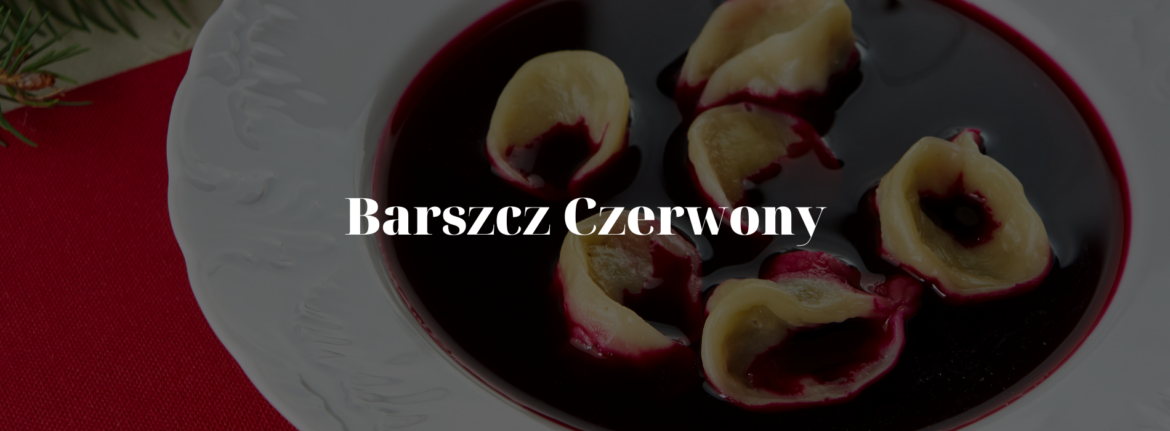
If you ask a Pole what Christmas smells like, they might mention pine needles or gingerbread, but eventually, they will all come back to one unmistakable aroma: the earthy, sweet, and tangy scent of barszcz czerwony.
Served on the evening of December 24th, this clear red beetroot soup is the undeniable centerpiece of Wigilia—the traditional Polish Christmas Eve supper. But to call it just a „beet soup” is a massive understatement. Barszcz czerwony is a culinary institution, a test of a cook’s patience, and a vibrant symbol of Polish heritage.
Clearing Up the Borscht Confusion
Let’s get one thing straight right away: Polish barszcz czerwony is not the same as Ukrainian borscht. While both share a Slavic ancestry and a love for beets, their executions are entirely different.
If you order borscht in Ukraine or North America, you will likely receive a hearty, thick stew loaded with chunks of potato, shredded cabbage, carrots, and often beef or pork.
Polish Christmas barszcz, on the other hand, is an exercise in elegance.
- The Texture: It is a perfectly clear, translucent broth. You should be able to see the bottom of your bowl through its ruby-red hue.
- The Ingredients: It is strictly meatless, relying on root vegetables and wild forest mushrooms for its base.
- The Delivery: It is often served in a mug to be sipped, or in a wide bowl accompanied by a very specific type of dumpling.
The Secret Ingredient: Time and Zakwas
You cannot rush perfection, and you certainly cannot rush barszcz. The secret to its deep, complex flavor isn’t just boiling beets—it’s fermentation.
Days, or even weeks, before Christmas, Polish kitchens become makeshift laboratories for zakwas buraczany (fermented beetroot juice).
- Raw beets are chopped and submerged in sterilized jars of salted water.
- Garlic, bay leaves, and allspice berries are added to the mix.
- The concoction is left to ferment in a dark place until it develops a sharp, tangy, and deeply savory flavor profile.
This zakwas is the soul of the soup. When blended with a rich, meatless mushroom and vegetable broth, it provides that signature Polish balance of sweet, sour, and umami.
The Rule of Wigilia: No Meat Allowed
The Wigilia supper traditionally consists of twelve dishes—symbolizing the twelve apostles or the twelve months of the year—and strictly forbids meat. This stems from centuries of Catholic fasting traditions leading up to Christmas Day.
Because the cook cannot rely on beef or chicken bones to give the soup depth, barszcz czerwony leans heavily on dried wild forest mushrooms (often porcini picked during the autumn months). These mushrooms are simmered low and slow, extracting a dark, earthy essence that makes the soup taste incredibly rich, despite being completely vegan.
Enter the Uszka (Little Ears)
Barszcz czerwony rarely travels alone. When served in a bowl, it is almost always accompanied by uszka.
Literally translating to „little ears,” uszka are miniature, ring-shaped dumplings. They look like tiny tortellini, but their filling is fiercely Polish: a finely minced mixture of wild mushrooms and sometimes slow-cooked onions or cabbage. Floating in the deep red broth, these little dumplings soak up the tangy soup, creating a perfect bite that Poles look forward to all year long.
A Bowl Full of Symbolism
Like the linguistic quirks and slang that define the Polish language, the food on the Wigilia table is a museum of collective memory.
Historically, beets were associated with longevity and good health. Consuming them on the eve of the most important holiday was believed to ensure a long, robust life for the year ahead. The wild mushrooms folded into the uszka connect the family to the ancient Polish tradition of foraging, tying the festive table back to the forests that cover much of the country.
Ultimately, barszcz czerwony is more than just the first course of a meal. It is the official starting gun of the Polish holidays. When the first star appears in the night sky and the steaming, ruby-red broth is poured, Christmas has officially arrived.