When exploring Polish cuisine, you will eventually hit a culinary crossroads. You will graduate from the safe, comforting realms of pierogi, potato pancakes, and chicken soup (rosół), and you will be faced with the ultimate test of a true gourmand: flaki.
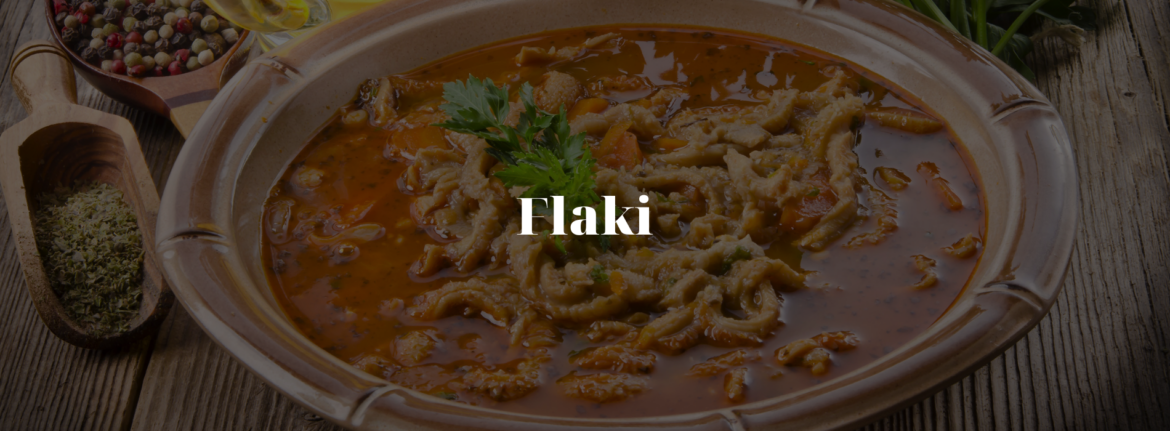
Translating literally to „guts” or „intestines,” flaki (or the diminutive flaczki) is a thick, heavily spiced beef tripe soup. It is the cilantro of Polish food—people either devour it with absolute, mouth-watering devotion, or they refuse to be in the same room when it is simmering on the stove. There is no middle ground.
A Dish Fit for a King
Because it is made from offal, it is easy to assume that flaki is simply peasant food, born out of the same agricultural frugality that created kaszanka. While it definitely aligns with the „waste not, want not” philosophy, this soup actually boasts a surprisingly aristocratic pedigree.
Historically, flaki was the absolute favorite dish of King Władysław II Jagiełło, one of Poland’s most prominent medieval rulers (and the victor of the Battle of Grunwald in 1410). The King’s love for the dish elevated its status, proving that when prepared correctly, tripe can be a royal delicacy.
The Art of Preparation and Patience
Making proper flaki is a massive labor of love. The tripe itself has a notoriously rubbery texture and a strong, pungent odor in its raw state. Transforming it into a tender, savory masterpiece requires serious culinary dedication:
- The Purification: The raw beef stomach lining must be meticulously cleaned, scraped, and boiled in salted water multiple times. The water is repeatedly drained and replaced until the tripe is completely neutralized.
- The Cut: Once purified and softened, the tripe is sliced into thin, noodle-like strips.
- The Broth: These strips are then slow-simmered in an incredibly rich, gelatinous beef bone broth loaded with traditional Polish root vegetables like carrots, celery root (seler), and parsley root.
An Unexpectedly Exotic Flavor Profile
What surprises most foreigners who are brave enough to try flaki is not the texture of the meat, but the aggressive, warming complexity of the broth.
To balance the distinct earthiness of the tripe, Polish cooks rely on a heavy hand with spices that you might associate more with gingerbread than a meat stew. A traditional bowl relies on:
- Marjoram: The undisputed champion of Polish savory herbs, added by the handful.
- Warm Spices: Generous dashes of ground nutmeg, ginger, and sometimes sweet paprika.
- Black Pepper: Flaki is traditionally served piping hot and unapologetically peppery to cut through the heavy richness of the broth.
The Ultimate Late-Night Wedding Savior
Today, flaki holds a legendary, almost medicinal status in Polish party culture. If you attend a traditional Polish wedding, right around 1:00 or 2:00 AM, the music might quiet down just long enough for the kitchen doors to swing open. Out come the steaming bowls of flaki.
Served with a thick slice of crusty sourdough bread, it is widely considered the ultimate hangover prevention. It is a spicy, protein-packed, salty shock to the system designed to sober guests up just enough to keep them dancing—and toasting—until the sun comes up.
Eating flaki is a true culinary rite of passage. It challenges preconceptions about texture and ingredients, rewarding the brave with a deeply savory, complex bowl of living history.