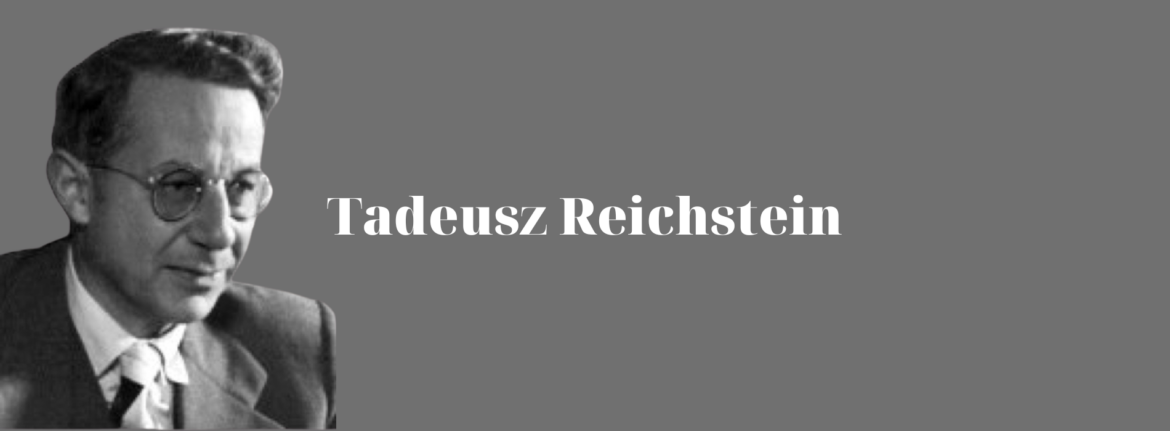
Tadeusz Reichstein’s life was defined by the meticulous deconstruction of nature’s most complex chemical puzzles. Born in Włocławek, Poland, before his family eventually settled in Switzerland, Reichstein became one of the most prolific and impactful organic chemists of the 20th century. While his name might not be a household staple, his discoveries reside in almost every pharmacy and hospital in the world.
His groundbreaking work in isolating and understanding the intricate chemical structures of hormones fundamentally birthed modern endocrinology and revolutionized how we treat autoimmune and inflammatory diseases.
The Prelude: Industrializing Vitamin C
Before he turned his attention to the human endocrine system, Reichstein achieved a massive biochemical milestone. In 1933, independently and almost simultaneously with British scientists, he figured out how to synthesize Vitamin C (ascorbic acid).
More importantly, he designed a highly efficient, multi-step chemical method that combined chemical and bacterial fermentation processes. Known as the Reichstein process, this methodology allowed for the cheap, industrial-scale mass production of Vitamin C. It transformed a rare, highly unstable nutrient into an everyday, accessible supplement, effectively eliminating scurvy as a global public health threat.
Unlocking the Adrenal Enigma
With his reputation cemented, Reichstein turned to a much darker and more complex biological mystery: the adrenal glands. Sitting atop the kidneys, these small organs were known to be absolutely essential for human survival. If the outer layer of the gland—the adrenal cortex—was destroyed or removed, a person would quickly die from Addison’s disease. However, in the 1930s, no one actually knew what life-saving substances the cortex was secreting.
Reichstein approached this biological problem with the sheer brute-force methodology of an industrial chemist. Because the hormones were present in the glands in infinitesimally small quantities, he required literal tons of raw material. Working with immense quantities of cattle adrenal glands obtained from slaughterhouses, he engaged in a painstaking process of chemical extraction, purification, and crystallization.
Mapping the Steroid Landscape
Reichstein’s exhaustive work paid off brilliantly. He successfully isolated 29 distinct chemical compounds from the adrenal cortex. He didn’t just find them; he meticulously dismantled them to understand their underlying molecular architecture.
He proved that these mysterious, life-giving substances were steroids—a specific class of organic compounds characterized by a core structure of four fused carbon rings. Among the compounds he isolated and structurally identified were some of the most critical hormones in the human body, including:
- Cortisone and Cortisol: Glucocorticoids that regulate metabolism, reduce inflammation, and manage the body’s stress response.
- Aldosterone: A mineralocorticoid (which he later co-isolated and identified) that strictly regulates blood pressure and the balance of salt and water in the body.
The 1950 Nobel Prize and a Medical Revolution
Reichstein’s structural mapping of these hormones provided the exact blueprints the pharmaceutical industry needed. Because scientists now knew what these molecules looked like, they no longer had to harvest them from millions of animals; they could synthesize them directly in a laboratory.
When American researchers Philip Showalter Hench and Edward Calvin Kendall discovered that one of these newly synthesized compounds—cortisone—could dramatically reverse the crippling effects of rheumatoid arthritis, it triggered a medical revolution. Almost overnight, synthetic corticosteroids became miracle drugs for treating severe inflammation, asthma, and autoimmune disorders.
For his unparalleled work in mapping the chemical architecture of these hormones, Tadeusz Reichstein shared the 1950 Nobel Prize in Physiology or Medicine with Kendall and Hench. His legacy is a perfect intersection of organic chemistry and human biology, proving that understanding the exact structure of a molecule is the first step to harnessing its power to heal.