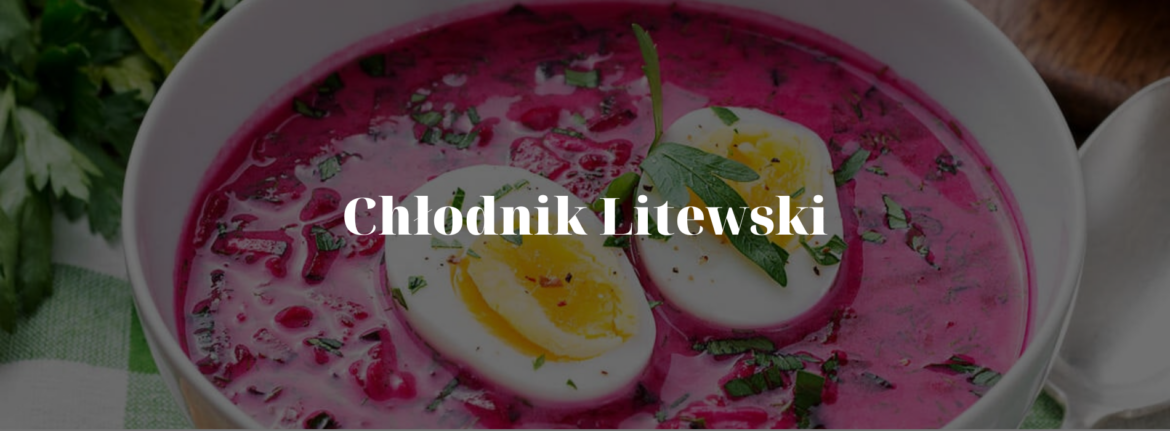
If you visit Poland in the middle of July, when the cities are sweltering and the countryside is baking under the sun, a heavy bowl of hot soup is the last thing you want. But Poles are historically a soup-loving people, and they do not abandon their spoons just because of a heatwave.
Instead, they turn to a dish that is as visually shocking as it is refreshing: chłodnik litewski.
Served ice-cold and boasting a brilliant, almost unnatural neon-pink color, this chilled beet soup is the undisputed king of Polish summer cuisine. It is light, tangy, herbaceous, and deeply tied to the region’s complex history.
The Polish-Lithuanian Connection
Foreigners are often confused by the name. If it is a classic Polish dish, why is it called chłodnik litewski (Lithuanian cold soup)?
The answer lies in a massive piece of European history: the Polish-Lithuanian Commonwealth. For centuries, Poland and Lithuania were united into a single, vast powerhouse state. This political union naturally resulted in a deep culinary cross-pollination. Many dishes that are considered quintessentially Polish today actually trace their roots to the dense forests and dairy-rich farmlands of historic Lithuania.
Chłodnik litewski is the most famous survivor of this cultural exchange. It is an edible time capsule that reminds modern diners of a time when the borders of Eastern Europe looked vastly different.
Botwinka: The Star of the Show
While winter barszcz czerwony relies on mature, earthy root beets, summer chłodnik demands youth and freshness. The absolute foundation of the soup is botwinka—young, tender beetroots pulled from the earth early in the season, complete with their vibrant magenta stems and leafy green tops.
- The Prep: The young beets, stems, and leaves are chopped finely and simmered just long enough to soften them and extract that signature dye.
- The Cooling: Unlike other soups, the cooking process stops here. The delicate broth is set aside to cool completely before the magic really happens.
The Tangy Dairy Base and the Crunch
Once the botwinka base is chilled, it is time to build the soup. Chłodnik litewski is never heated again; instead, it is transformed into a creamy, crunchy, herbaceous delight.
- The Dairy: The rich pink color and tangy flavor come from a generous pour of cultured dairy. Traditionally, cooks use kefir, maślanka (buttermilk), or zesty sour milk (zsiadłe mleko). This dairy base provides a cooling, probiotic punch that cuts through the summer humidity.
- The Crunch: To add texture, the soup is heavily fortified with raw, finely diced cucumbers and crispy red radishes.
- The Herbs: No bowl is complete without a massive handful of freshly chopped dill and vibrant green chives, giving the soup a distinctly grassy, garden-fresh aroma.
The Finishing Touch: The Egg
When a bowl of chłodnik litewski arrives at the table, it is usually crowned with one final, essential ingredient: a hard-boiled egg cut perfectly in half.
The bright yellow yolk and white egg act as a beautiful visual contrast against the neon pink soup. More importantly, the rich, fatty egg provides a necessary protein boost to an otherwise light, vegetable-heavy dish, turning a simple chilled broth into a satisfying summer lunch.
Eating chłodnik litewski is like consuming the essence of a Polish summer garden. It is vibrant, historically rich, and entirely refreshing.