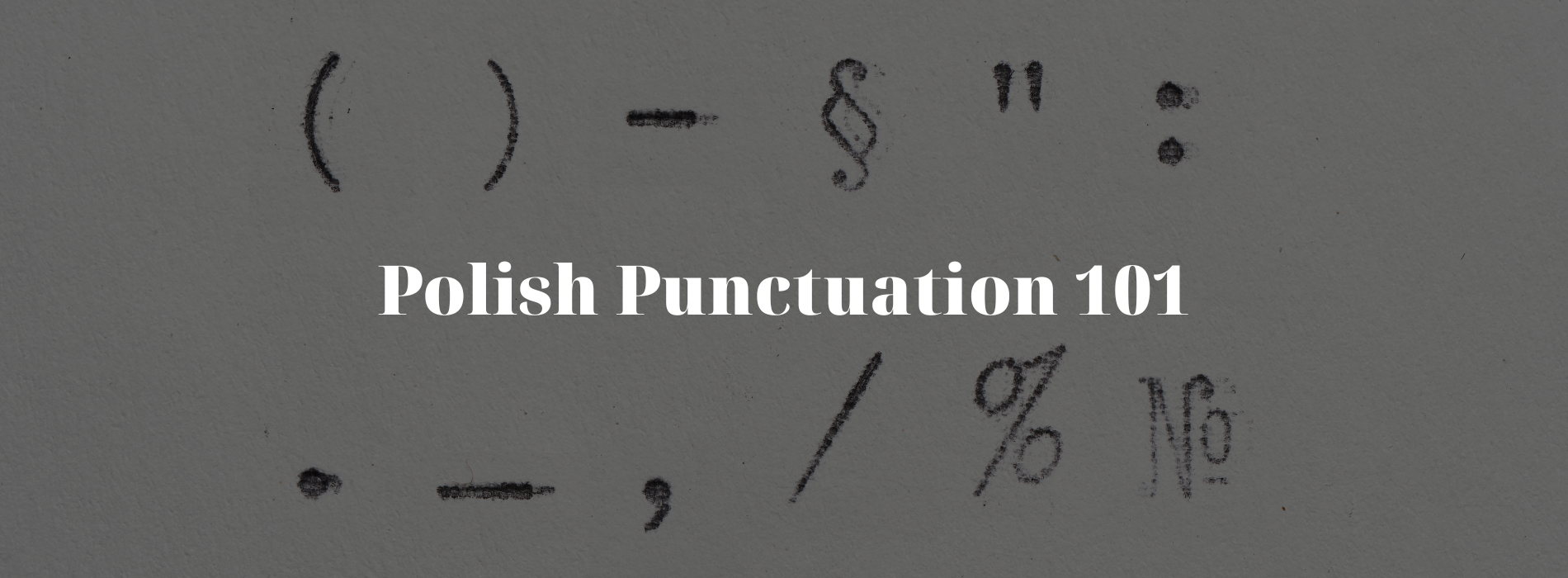
Punctuation is the silent choreographer of language. It guides rhythm, clarifies meaning, and prevents chaos in written communication. And while Polish punctuation may look familiar to English speakers—using the same commas, periods, and question marks—it comes with its own rules, logic, and tricky pitfalls.
Whether you’re learning Polish or just want to tidy up your writing, understanding how punctuation works is essential. This guide takes you through the basics of Polish punctuation, highlighting key rules, useful tips, and the most common traps to avoid.
The Basics: Familiar but Different
Polish uses the Latin alphabet, and its punctuation marks largely mirror those in English. Here are the most common ones:
- Kropka (.) – period/full stop
- Przecinek (,) – comma
- Średnik (;) – semicolon
- Dwukropek (:) – colon
- Pytajnik (?) – question mark
- Wykrzyknik (!) – exclamation mark
- Myślnik (–) – dash
- Cudzysłów („”) – quotation marks
- Nawiasy () – parentheses
- Wielokropek (…) – ellipsis
At first glance, they function similarly to their English counterparts. But don’t be fooled—many rules differ, especially around commas and quotation marks.
Commas: The Trickiest Mark
Ask any Polish student or editor what punctuation mark causes the most trouble, and the answer will be unanimous: the comma.
Unlike English, where commas often signal pauses or „breathe points,” Polish comma usage is more grammatically bound. It depends heavily on sentence structure and conjunctions.
Key Rules:
- Before „że” and „żeby”
Always place a comma before że (that) and żeby (in order to):
→ Wiem, że masz rację.
(„I know that you’re right.”) - Before conjunctions like „ale”, „lecz”, „więc”, „jednak”, „ponieważ”
→ Chciałem iść na spacer, ale zaczęło padać.
(„I wanted to go for a walk, but it started raining.”) - No comma before „i”, „oraz”, „ani”, „lub” when linking similar parts
→ Kupiłem mleko i chleb.
(„I bought milk and bread.”)
But if there’s a full sentence after i, you add a comma:
→ Zjadł śniadanie, i poszedł do pracy. - After introductory phrases
→ Po pierwsze, to nie jest takie proste.
(„Firstly, it’s not that simple.”) - In subordinate clauses
Polish is strict about marking dependent clauses with commas.
→ Gdy tylko wyszliśmy z domu, zaczęło padać.
(„As soon as we left the house, it started raining.”)
Trap to Avoid:
Don’t overuse commas based on rhythm alone. In Polish, what feels like a pause doesn’t always need a comma. Stick to structure.
Periods and Capital Letters
The kropka is straightforward: it ends sentences, just like in English.
However, Polish capitalisation is more conservative. For example:
- Days of the week, months, and nationalities are not capitalised:
→ poniedziałek, styczeń, polski, niemiecki - Titles of books and films usually have only the first word capitalised:
→ Lalka, Pan Tadeusz, W pustyni i w puszczy
This often surprises English speakers, who expect to capitalise everything in a title or proper noun.
Quotation Marks: „Not Like This”
One of the most visible differences in Polish writing is the use of quotation marks.
In Polish, the standard form is:
→ „quotation”
Not:
→ „quotation” or ‘quotation’
Nested quotes use:
→ „He said: »I’m going to the shop«.”
These are sometimes hard to type on non-Polish keyboards, but essential in formal writing and print. In informal or online settings, people sometimes substitute English-style quotes—but purists notice.
Also note:
- The colon before a quote is optional if the sentence flows smoothly.
- Punctuation goes outside quotation marks unless part of the quoted material:
→ Powiedziała: „Nie wiem”.
→ Czy to znaczy „koniec”?
Dashes, Hyphens, and Ellipses
Polish writing uses both hyphens (-) and dashes (–), but they serve different purposes:
- Hyphens join compound words: biało-czerwony
- Dashes mark dialogue, sudden breaks, or list items:
→ – Co robisz? – zapytał.
(Used instead of quotation marks for dialogue)
Ellipses (…) suggest hesitation, omission, or trailing off:
→ Nie wiem… może masz rację.
Unlike English, Polish doesn’t always add a space before or after an ellipsis. Formatting depends on style guides.
Colons and Semicolons: Not Just for Fancy Writers
Colons (dwukropek) introduce lists, explanations, or quoted speech.
→ Potrzebuję trzech rzeczy: mleka, chleba i masła.
Semicolons (średnik) separate complex list items or sentences closely related in thought:
→ Pojechaliśmy do Krakowa; odwiedziliśmy Wawel; zjedliśmy obiad na rynku.
While not as commonly used as in English academic writing, semicolons are a subtle way to improve sentence flow in essays and formal texts.
Question and Exclamation Marks
These work as expected, but there are a few notes:
- No double punctuation:
→ Naprawdę?! is wrong; choose one mark. - Question and exclamation marks do not change word order as they might in English.
→ Naprawdę to powiedziałeś?
(“Did you really say that?”)
→ To niesamowite!
(“That’s amazing!”)
No need to restructure the sentence like “Is that amazing?!”
Parentheses, Brackets, and Slashes
- Parentheses (nawiasy) offer extra info:
→ Wrocław (dawniej Breslau) to piękne miasto. - Square brackets are rare, mostly used in academic texts or edits:
→ [przypis redakcji] - Slashes (/) are used informally to show alternatives:
→ Tak/nie
But in formal writing, use full words: tak lub nie
Final Tip: Read It Aloud
A great way to check your punctuation in Polish is to read the sentence out loud—slowly and thoughtfully. If the sentence structure feels complex, a comma might help clarify it. If you find yourself adding pauses where they don’t belong grammatically, consider whether the comma is actually necessary.
In the End…
Polish punctuation may not seem wildly different from English at first glance, but its precision, structure-based rules, and subtle expectations can trip up even fluent speakers.
Mastering it is less about memorising long lists of do’s and don’ts, and more about internalising sentence structure, noticing patterns, and reading lots of good Polish writing.
From the humble comma to the elegant dash, punctuation is the unsung hero of Polish fluency. Use it well, and your writing will not only be clearer—it’ll sing with rhythm and logic.
You may find the following topics interesting: