Tag: Language
-

Anyone who’s tried to learn Polish has likely asked themselves a version of this question: why does a language need both ‘rz’ and ‘ż’, or ‘ó’ and ‘u’, when they sound exactly the same? The answer lies not in phonetics, but in history, etymology, and tradition. Polish spelling, though seemingly illogical to the newcomer, is…
-

The Polish language, rich in history and expressive nuance, has evolved continuously over the centuries. From medieval chronicles and Renaissance poetry to modern-day pop culture and internet slang, Polish has absorbed, adapted, and reshaped itself to meet the changing needs of its speakers. Today, however, it faces one of its most dynamic periods of transformation…
-
The oldest known sentence written in Polish comes from around 1270 and appears in the Book of Henryków, a Latin chronicle of the Cistercian monastery in Lower Silesia. In the midst of a Latin narrative, one phrase stands out: „Day ut ia pobrusa, a ti poziwai.” This roughly translates to: “Let me grind, and you…
-

If you’ve ever travelled around Poland or spoken with people from different regions, you may have noticed that not everyone uses the same words for the same things. While standard Polish is taught in schools and used in media, many Poles continue to speak in ways that reflect their local heritage. These unique expressions, called…
-
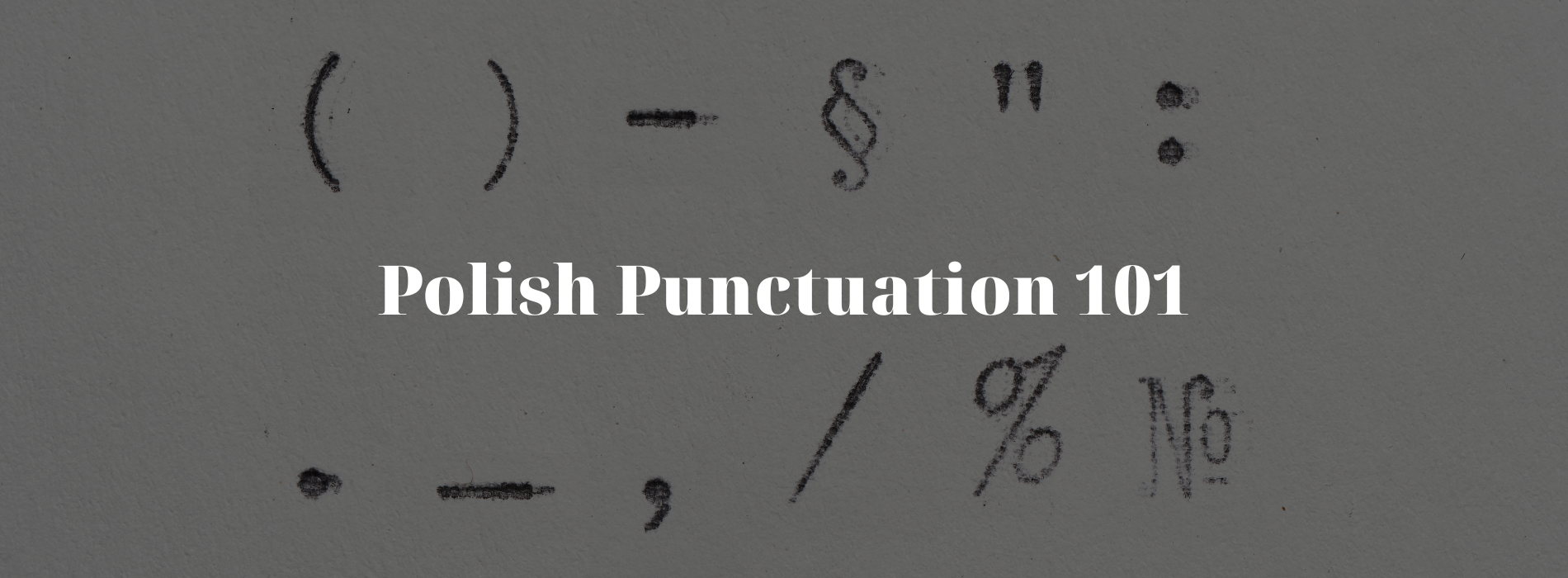
Punctuation is the silent choreographer of language. It guides rhythm, clarifies meaning, and prevents chaos in written communication. And while Polish punctuation may look familiar to English speakers—using the same commas, periods, and question marks—it comes with its own rules, logic, and tricky pitfalls. Whether you’re learning Polish or just want to tidy up your…
-

Poland may appear linguistically unified on the surface—after all, almost everyone speaks Polish, and the standard literary form is widely taught in schools. But scratch that surface, and you’ll discover a fascinating world of regional speech varieties, known as dialects (dialekty) and local vernaculars (gwary), which add rich texture to everyday communication across the country.…
-
Languages are like living beings. They are born, grow, evolve, borrow from their surroundings, and adapt to changing times. The Polish language is no different. With over a thousand years of history, it tells a story not only of words and grammar, but also of the people, rulers, migrations, wars, and cultures that shaped what…
-
Language isn’t static—it’s alive. Nowhere is that more obvious than in the ever-changing slang used by young people. Each generation invents, reuses, and redefines words to express what matters to them, how they feel, and who they are. In Poland, this evolution is celebrated annually through a special competition: Młodzieżowe Słowo Roku—the Youth Word of…
-
Poland’s rich history, diverse landscapes, and vibrant culture have inspired countless works of literature that delve into the nation’s past, explore its present, and imagine its future. For those interested in exploring Poland through the written word, here are several highly recommended books that span historical accounts, novels, and insightful sociopolitical analyses. These works not…
-
The Early Roots The term „Polska” is derived from the name of the Polans, an early Slavic tribe recognized for founding a settlement in the Warta River basin. The name „Polanie” itself roughly translates to „people of the field” or „people of the plain,” reflecting the tribe’s geographical location in the flatlands of what is…