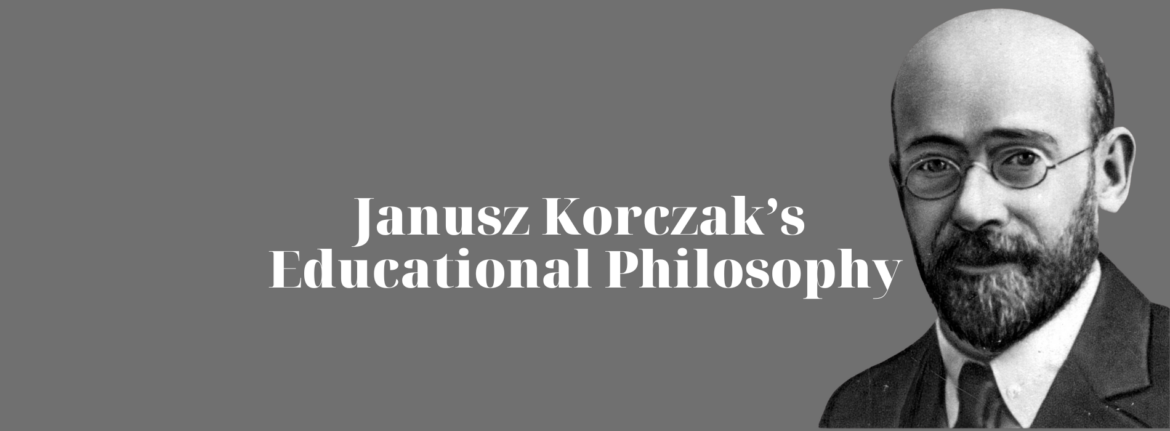
Long before the United Nations drafted the Convention on the Rights of the Child, a Polish-Jewish pediatrician, author, and educator named Janusz Korczak was already putting these concepts into radical, everyday practice. Born Henryk Goldszmit, Korczak fundamentally rejected the authoritarian models of child-rearing that dominated early 20th-century Europe.
His philosophy was built on a profoundly simple but revolutionary premise: children are not „people-in-the-making.” They are already people, deserving of the exact same dignity, respect, and civil rights as adults.
The Republic of Children
In 1912, Korczak founded Dom Sierot, an orphanage for Jewish children in Warsaw, which he designed not as an institution, but as a miniature democratic republic. He believed that the best way to teach children how to be responsible citizens in a democracy was to let them live in one.
Instead of dictating rules from the top down, he empowered the children to govern themselves. The orphanage operated with its own working micro-society, featuring a children’s parliament, a labor system where chores were compensated, and a widely read internal newspaper. By placing institutional trust in the children, Korczak fostered a fierce sense of independence and communal responsibility.
The Court of Peers
Perhaps the most radical innovation of Korczak’s pedagogy was the Court of Peers. Rather than adults handing down arbitrary punishments for misbehavior, the children themselves served as the judges.
The court had the power to hear grievances, evaluate evidence, and issue verdicts. Astoundingly, this judicial system held everyone equally accountable—including Korczak and the adult staff. If a teacher wronged a child, the child had the absolute right to take that adult to the Court of Peers. This methodology taught children the mechanics of justice, empathy, and the rule of law through direct, lived experience rather than abstract lectures.
The Magna Carta of Children’s Rights
Korczak did not just create systems; he articulated a deep philosophical framework for how humanity should view its youngest members. He formulated a set of fundamental rights that served as the bedrock of his democratic pedagogy:
- The Right to the Present: A child’s current life is inherently valuable and must be respected right now, not merely viewed as a stepping stone or preparation for adulthood.
- The Right to Be Themselves: Children are individuals with their own unique personalities, thoughts, and right to privacy. They are not clay to be forcefully molded into an adult’s idealized image.
- The Right to Make Mistakes: Often controversially translated as „the right to their own death,” this principle argued that adults must not overprotect children to the point of stifling their growth. Children must have the freedom to take calculated risks, fail, and learn from their own natural consequences.
A Lasting Blueprint for Modern Systems
Korczak’s tragic death in Treblinka—having refused multiple offers of sanctuary so he could stay with his orphans to the very end—often overshadows the immense practical triumph of his life’s work. Yet, his ideas laid the groundwork for modern, progressive schooling.
Today, modern educational frameworks increasingly reflect Korczak’s holistic vision. For instance, the contemporary Polish education system is designed to guarantee the right to learn and to develop the skills needed for social and professional life. From the very earliest stages of schooling, modern curricula emphasize not just academics, but holistic social, motor, emotional, and cognitive development. While rigid, standardized systems still dominate much of the globe, the growing integration of student councils, peer mediation programs, and social-emotional learning are the direct descendants of Korczak’s Warsaw orphanage.
His methodology serves as a permanent reminder to educators worldwide: the ultimate goal of schooling is not simply academic compliance, but the cultivation of autonomous, ethical, and self-governing human beings.