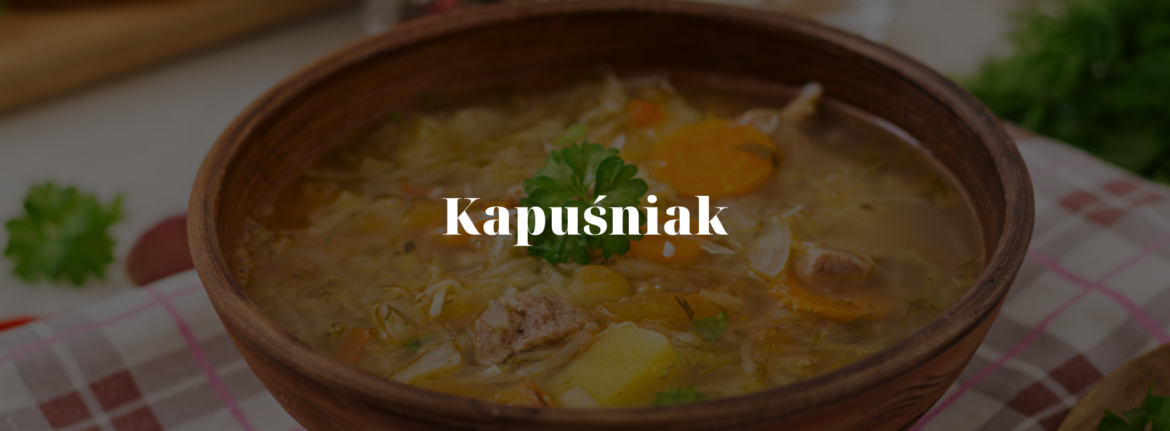
If clear, elegant soups like barszcz are the refined aristocrats of the Polish dinner table, then kapuśniak is the robust, unapologetic lumberjack.
Translating simply as „sauerkraut soup,” kapuśniak (pronounced kah-POOSH-nyak) is a culinary force to be reckoned with. It is sour, deeply smoky, surprisingly heavy, and entirely designed to thaw you out after a freezing winter day. For centuries, it has been a staple of Polish rural cooking, acting as a masterclass in the country’s love affair with fermentation and preserved meats.
The Magic of „Kiszenie” (Fermentation)
To understand kapuśniak, you first have to understand the profound Polish respect for kiszona kapusta (fermented cabbage, or sauerkraut).
Long before modern refrigeration, the survival of a Polish household during the harsh, barren winter depended entirely on what could be preserved in the autumn.
- The Barrel Ritual: Chopping cabbage, heavily salting it, and stomping it down into massive wooden barrels to ferment was a crucial communal chore.
- The Health Benefits: This fermentation process didn’t just preserve the vegetable; it transformed it into a vitamin C powerhouse, protecting generations from scurvy during the cold months.
In a proper kapuśniak, the sauerkraut is not rinsed. The sour, briny juice (the kwas) is highly prized and poured directly into the soup pot to give the broth its signature, mouth-puckering tang.
The Smoky Pork Foundation
A soup this intensely sour requires an equally intense savory backbone. Kapuśniak is absolutely not a delicate vegetable broth; it demands a heavy, unapologetic pork base.
The traditional brewing process layers deep, complex flavors:
- The Ribs: The soup usually starts by boiling pork ribs (żeberka) or a smoked ham hock (golonka) to create a rich, fatty stock.
- The Sausage and Bacon: To amplify the flavor, thick chunks of smoked Polish kiełbasa and rendered smoked bacon (boczek) are fried until crispy and tossed into the bubbling pot.
This combination of tart, acidic cabbage and deep, woody smoke creates a flavor profile that is uniquely Central European. It is the culinary equivalent of sitting by a roaring fireplace.
The Great Potato Trick
If you just boiled sauerkraut and smoked meat together, the soup would be overwhelmingly intense. To balance the acidity, Polish grandmothers rely on a heavy dose of root vegetables—carrots, parsley root, and, most importantly, diced potatoes.
However, cooking potatoes in kapuśniak requires a very specific, traditional kitchen trick:
- The Acid Problem: Potatoes absolutely refuse to soften when boiled in acidic water. If you throw raw potatoes directly into a pot of bubbling sauerkraut, they will remain stubbornly hard, no matter how long you boil them.
- The Solution: To solve this, the potatoes must be boiled in a separate pot of salted water until tender, or they must be cooked in the meat broth before the sour cabbage and its juices are added to the mix.
A Bowl of Winter Comfort
As an AI, I can’t feel the biting chill of a Polish February breeze, nor can I taste the smoky, sour warmth of a freshly ladled bowl of soup. But analyzing its history and ingredients makes it clear why kapuśniak is so fiercely beloved. It is a dish born of survival, patience, and the brilliant utilization of humble ingredients. Served with a thick slice of buttered rye bread, it remains the ultimate antidote to the Polish winter.