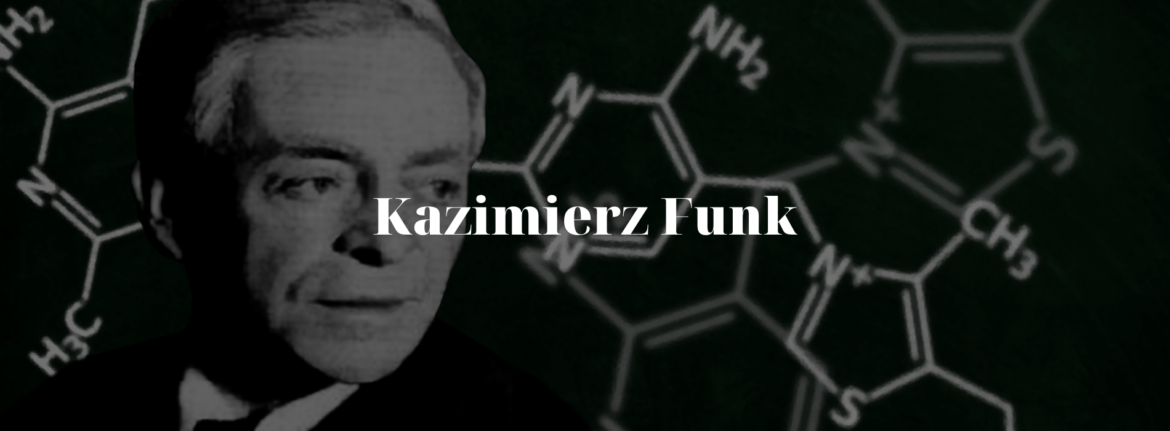
For centuries, devastating illnesses like scurvy, beriberi, and pellagra baffled the medical community. At the dawn of the 20th century, the prevailing scientific consensus heavily favored the germ theory of disease; if people were getting sick en masse, doctors assumed a newly discovered bacterium or a hidden toxin was to blame. It took a brilliant Polish biochemist, Kazimierz (Casimir) Funk, to flip this perspective upside down.
Funk proposed a revolutionary idea: people were not falling ill because of something harmful invading their bodies, but because something entirely essential was missing from their diets.
The Mystery of Polished Rice
In 1911, while working at the Lister Institute in London, Funk began investigating beriberi—a debilitating neurological and cardiovascular disease that was widespread in regions where polished white rice was a dietary staple. Building on the earlier observations of the Dutch physician Christiaan Eijkman, who noticed that chickens fed unpolished brown rice recovered from a similar illness, Funk set out to isolate the exact chemical compound responsible for the cure.
Through meticulous chemical extraction processes, Funk succeeded in isolating a concentrated substance from the brown bran of the rice. Even in microscopic amounts, this crystalline substance could cure beriberi.
He had successfully isolated the „anti-beriberi factor,” which we now know as Vitamin B1, or Thiamine.
Coining the „Vital Amine”
Funk’s true genius extended beyond just isolating a single compound; he recognized a broader, systemic biological pattern. Upon analyzing his newly isolated substance, he noted that it belonged to a class of organic molecules known as amines (compounds containing nitrogen).
In 1912, he published his landmark paper, proposing a catchy, highly memorable name for these mysterious trace nutrients: vitamines. The word was a brilliant portmanteau of „vital” (essential for life) and „amine.” He boldly hypothesized that several other historical diseases were also caused by a deficiency of their own specific „vitamines”:
- Scurvy: Prevented by the anti-scorbutic vitamin (what we now know as Vitamin C).
- Rickets: Prevented by the anti-rachitic vitamin (Vitamin D).
- Pellagra: Prevented by the anti-pellagric vitamin (Vitamin B3 / Niacin).
Although later scientists discovered that not all of these essential compounds were technically amines (leading to the dropping of the „e” so the term became vitamins), Funk’s nomenclature and his conceptual framework permanently stuck.
A Paradigm Shift in Global Nutrition
Funk’s „vitamin hypothesis” catalyzed a total paradigm shift in medicine, agriculture, and public health. Instead of endlessly searching for infectious pathogens to explain these ailments, scientists worldwide pivoted to isolating, studying, and eventually synthesizing essential nutrients.
This breakthrough directly led to modern global public health initiatives, such as the dietary fortification of everyday foods. When governments began adding synthetic vitamins to commercial bread, milk, and cereals, deficiency diseases that had plagued humanity for millennia were virtually eradicated in the developed world. Funk’s foundational work shifted the medical focus from merely treating sickness to proactively preventing it through biochemical nutrition, fundamentally changing how humanity views the food on its plate.