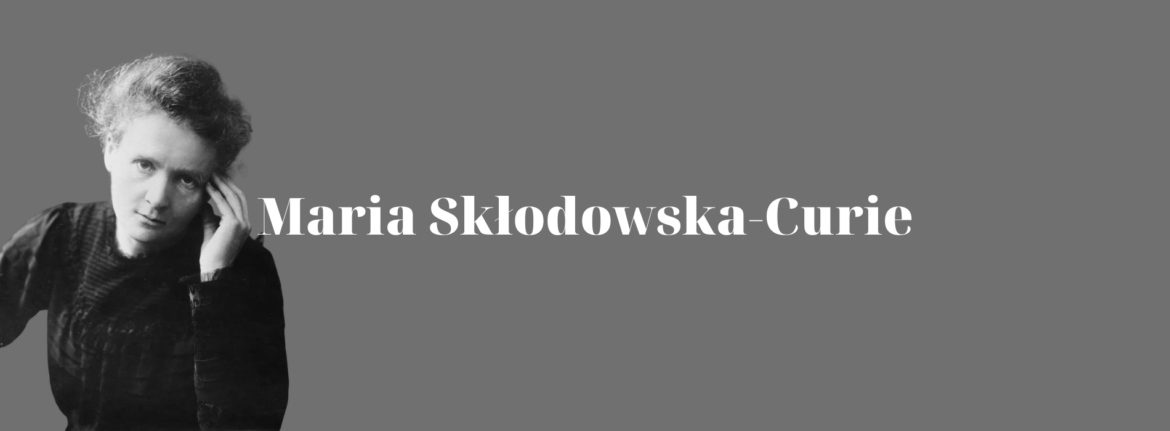
Maria Skłodowska-Curie’s name is permanently etched into the history of science, most often accompanied by a familiar list of „firsts”: the first woman to win a Nobel Prize, the first person to win twice, and the only person to win in two different scientific fields. While these accolades are legendary, they often overshadow the rigorous, groundbreaking methodology that led to them. Curie’s true genius lay not just in what she discovered, but in how she discovered it, fundamentally bridging the gap between physics and chemistry.
To understand her impact, we have to look past the awards and examine the painstaking laboratory work and visionary hypotheses that reshaped our understanding of matter.
The Electrometer and a New Way to See
Curie’s methodology was revolutionary because she used physical measurements to track chemical elements—a highly innovative approach at the turn of the 20th century. When she decided to investigate the mysterious „Uranium rays” discovered by Henri Becquerel, she did not rely on photographic plates as he had. Instead, she utilized a sensitive electrometer—invented by her husband, Pierre, and his brother, Jacques—to measure the faint electrical currents generated when these rays ionized the surrounding air.
This quantitative approach allowed her to test various compounds and minerals. She quickly realized that the activity of the uranium compounds depended solely on the quantity of uranium present, regardless of its chemical state. This led to her most profound, paradigm-shifting hypothesis: radiation was not the result of a chemical interaction between molecules, but an atomic property belonging to the element itself.
The Pitchblende Problem: Chemistry as Heavy Industry
If her hypothesis was a leap of physical intuition, proving it required an unprecedented feat of chemical endurance. When Curie tested pitchblende (a uranium-rich ore), she found it was four times more radioactive than pure uranium. Her logical, methodology-driven conclusion was that the ore must contain a new, highly radioactive, undiscovered element.
Isolating this element required processing tons of pitchblende in a drafty, unheated shed. Her method was a grueling cycle of:
- Boiling and dissolving massive vats of the ore.
- Fractional crystallization, a process of separating substances based on their different solubilities.
- Continuous electrometer testing to track which chemical fractions retained the highest levels of radioactivity.
Through this relentless, interdisciplinary process of physical tracking and chemical separation, she and Pierre discovered two new elements: polonium (named after her native Poland) and radium.
Redefining the Atom
Before Curie’s work, the atom was widely accepted as the smallest, indivisible building block of matter. By proving that atoms of radioactive elements were actively emitting energy and particles, Curie shattered this long-held dogma.
Her work laid the foundational groundwork for modern particle physics. If an atom could throw off pieces of itself (which we now know as alpha, beta, and gamma radiation), it meant the atom had an internal structure. It could be broken down. It could decay. This realization directly paved the way for Ernest Rutherford’s nuclear model of the atom and the entire field of quantum mechanics that followed.
A Legacy of Application
Curie’s methodology wasn’t confined to theoretical physics; she was deeply committed to the practical application of her discoveries. Recognizing the medical potential of radiation to treat neoplasms (tumors), she championed the use of radium in medicine.
During World War I, she took her scientific methodology to the battlefield. She designed mobile radiography units—affectionately dubbed „petites Curies” (Little Curies)—bringing X-ray technology directly to the front lines. She didn’t just invent them; she learned to drive them, trained medical staff to use them, and personally operated them, ensuring that anatomical physics could be used immediately to locate shrapnel and save lives.
Her approach to science was holistic: hypothesize boldly, measure precisely, work tirelessly, and apply the findings for the betterment of humanity. The Nobel Prizes were merely the world’s acknowledgment of a methodology that completely rewired modern science.